
The truth became undeniable: renting API access to massive, generalized models (like GPT-4 or Claude 3 Opus) is inherently flawed for specialized business applications. When an enterprise sends a query to the cloud, it pays a massive "API Tax" for the model to "know" everything from 18th-century French poetry to quantum physics—even if the company only needs the model to analyze a specific financial ledger, execute a localized Python script, or parse dense legal jargon.

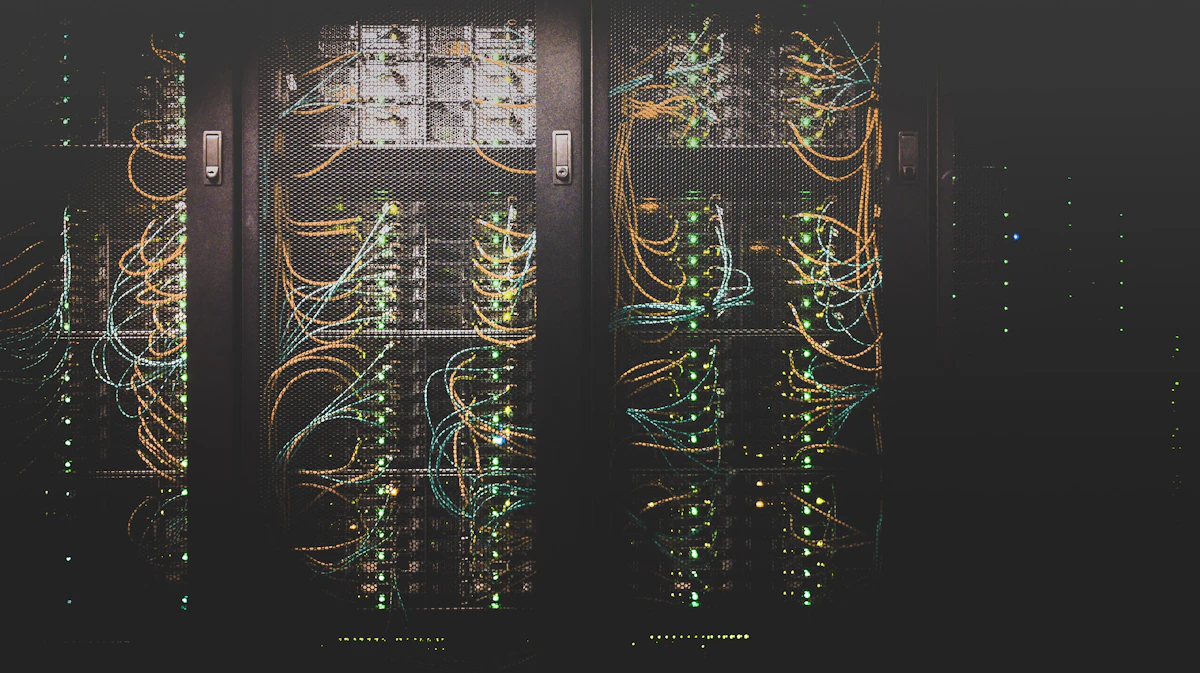
The 2025 transition: from monolithic cloud compute to agile, edge-deployed localized SLMs.
The Anatomy of an SLM: Lean, Mean, and Hyper-Focused
Enter the Small Language Model (SLM). Clocking in at anywhere from 1 Billion to 8 Billion parameters, these models represent a paradigm shift in machine learning architecture. Unlike their monolithic cousins, SLMs do not attempt to be general-purpose oracles. They are designed to do one thing exceptionally well.
The secret behind their success lies in a process called Quantization and Low-Rank Adaptation (LoRA). Specialized AI development firms take high-quality open-source SLMs (like Meta's Llama-3 8B or Mistral) and rigorously fine-tune them on highly specific, proprietary enterprise datasets.
Through quantization, developers compress the neural weights of the model from 16-bit floating points down to 4-bit integers. This mathematical wizardry allows a highly intelligent model to fit comfortably into the VRAM of a standard consumer laptop or an edge server, rather than requiring a $40,000 Nvidia H100 GPU cluster. The result is a model that outperforms trillion-parameter giants in its specific niche, running entirely offline.
Massive Cloud LLMs
- 1 Trillion+ Parameters
- Requires massive Cloud Compute clusters
- High latency (200ms - 2000ms+ roundtrips)
- Astronomical OPEX per 1 Million tokens
- Severe data privacy & leakage risks
- High rate of generalized "hallucinations"
Localized SLMs
- 1B to 8B Parameters
- Runs locally on Edge/On-Premise hardware
- Sub-millisecond execution latency
- Practically free at scale (CAPEX focus)
- 100% Data Sovereignty (Air-gapped)
- Hyper-specialized, verified accuracy

Figure 1: 4-Bit Quantization allowing SLMs to run on edge hardware.
The Latency War: Why Quants Moved to the Edge
In the world of algorithmic trading and quantitative finance, milliseconds are measured in millions of dollars. If a trading firm relies on a cloud API to run sentiment analysis on a breaking SEC filing, they have already lost the arbitrage opportunity to a firm running a localized model. Cloud routing introduces unpredictable network jitter, API rate limits, and server-side queuing that High-Frequency Trading (HFT) algorithms simply cannot tolerate.
By fine-tuning an SLM strictly on financial phraseology and deploying it directly to a server co-located with a major exchange (Edge AI), quantitative developers have effectively eliminated cloud latency.
"The SLM doesn't need to know how to write a historical essay; it only needs to know that a specific Federal Reserve phrasing implies a 25-basis-point interest rate hike, and it needs to execute the corresponding MetaTrader 5 (MT5) order instantly."
Enterprise Inference Efficiency (2025 Benchmarks)
Comparing cloud-based massive models vs. localized edge SLMs across 10 million daily inference tasks.
Data Sovereignty: The Regulatory Imperative
Beyond execution speed and unit cost, the single most critical driver of the 2025 SLM boom is Data Sovereignty. Law firms, healthcare providers, and proprietary hedge funds simply cannot send unredacted, privileged data to commercial APIs.
The risk of data leakage, or the nightmare scenario of proprietary data being ingested into a commercial model's future training run, violates strict compliance laws including HIPAA, SOC2, and the stringent European Union AI Act of 2025.
SLMs solve this paradox permanently. Because they are lightweight, they can run "air-gapped" entirely within a company's internal, disconnected intranet. Coupled with localized Retrieval-Augmented Generation (RAG) vector databases, the AI can read millions of internal documents without the data physically ever leaving the building. This provides the immense analytical power of Generative AI combined with the impenetrable security of a closed-loop system.
Interactive SLM Deployment Guide
Select your primary industry below to see how a bespoke Small Language Model architecture can eliminate your API costs and secure your data.
Stop Renting. Start Owning.
At AIdea Solutions, we build sovereign, highly-optimized Small Language Models and deploy them directly onto your infrastructure. Discuss your custom model fine-tuning and air-gapped security needs with our lead AI architects.
The truth became undeniable: renting API access to massive, generalized models (like GPT-4 or Claude 3 Opus) is inherently flawed for specialized business applications. When an enterprise sends a query to the cloud, it pays a massive "API Tax" for the model to "know" everything from 18th-century French poetry to quantum physics—even if the company only needs the model to analyze a specific financial ledger, execute a localized Python script, or parse dense legal jargon.
The 2025 transition: from monolithic cloud compute to agile, edge-deployed localized SLMs.
The Anatomy of an SLM: Lean, Mean, and Hyper-Focused
Enter the Small Language Model (SLM). Clocking in at anywhere from 1 Billion to 8 Billion parameters, these models represent a paradigm shift in machine learning architecture. Unlike their monolithic cousins, SLMs do not attempt to be general-purpose oracles. They are designed to do one thing exceptionally well.
The secret behind their success lies in a process called Quantization and Low-Rank Adaptation (LoRA). Specialized AI development firms take high-quality open-source SLMs (like Meta's Llama-3 8B or Mistral) and rigorously fine-tune them on highly specific, proprietary enterprise datasets.
Through quantization, developers compress the neural weights of the model from 16-bit floating points down to 4-bit integers. This mathematical wizardry allows a highly intelligent model to fit comfortably into the VRAM of a standard consumer laptop or an edge server, rather than requiring a $40,000 Nvidia H100 GPU cluster. The result is a model that outperforms trillion-parameter giants in its specific niche, running entirely offline.
Massive Cloud LLMs
- 1 Trillion+ Parameters
- Requires massive Cloud Compute clusters
- High latency (200ms - 2000ms+ roundtrips)
- Astronomical OPEX per 1 Million tokens
- Severe data privacy & leakage risks
- High rate of generalized "hallucinations"
Localized SLMs
- 1B to 8B Parameters
- Runs locally on Edge/On-Premise hardware
- Sub-millisecond execution latency
- Practically free at scale (CAPEX focus)
- 100% Data Sovereignty (Air-gapped)
- Hyper-specialized, verified accuracy
Figure 1: 4-Bit Quantization allowing SLMs to run on edge hardware.
The Latency War: Why Quants Moved to the Edge
In the world of algorithmic trading and quantitative finance, milliseconds are measured in millions of dollars. If a trading firm relies on a cloud API to run sentiment analysis on a breaking SEC filing, they have already lost the arbitrage opportunity to a firm running a localized model. Cloud routing introduces unpredictable network jitter, API rate limits, and server-side queuing that High-Frequency Trading (HFT) algorithms simply cannot tolerate.
By fine-tuning an SLM strictly on financial phraseology and deploying it directly to a server co-located with a major exchange (Edge AI), quantitative developers have effectively eliminated cloud latency.
"The SLM doesn't need to know how to write a historical essay; it only needs to know that a specific Federal Reserve phrasing implies a 25-basis-point interest rate hike, and it needs to execute the corresponding MetaTrader 5 (MT5) order instantly."
Enterprise Inference Efficiency (2025 Benchmarks)
Comparing cloud-based massive models vs. localized edge SLMs across 10 million daily inference tasks.
Data Sovereignty: The Regulatory Imperative
Beyond execution speed and unit cost, the single most critical driver of the 2025 SLM boom is Data Sovereignty. Law firms, healthcare providers, and proprietary hedge funds simply cannot send unredacted, privileged data to commercial APIs.
The risk of data leakage, or the nightmare scenario of proprietary data being ingested into a commercial model's future training run, violates strict compliance laws including HIPAA, SOC2, and the stringent European Union AI Act of 2025.
SLMs solve this paradox permanently. Because they are lightweight, they can run "air-gapped" entirely within a company's internal, disconnected intranet. Coupled with localized Retrieval-Augmented Generation (RAG) vector databases, the AI can read millions of internal documents without the data physically ever leaving the building. This provides the immense analytical power of Generative AI combined with the impenetrable security of a closed-loop system.
Interactive SLM Deployment Guide
Select your primary industry below to see how a bespoke Small Language Model architecture can eliminate your API costs and secure your data.
Stop Renting. Start Owning.
At AIdea Solutions, we build sovereign, highly-optimized Small Language Models and deploy them directly onto your infrastructure. Discuss your custom model fine-tuning and air-gapped security needs with our lead AI architects.