
The era of the "AI Copilot" is officially over. We have entered the age of the autonomous enterprise agent.
Mid-April 2026 has brought a seismic shift to the artificial intelligence ecosystem. Anthropic’s highly anticipated release of Claude Opus 4.7 is not just an incremental update; it is a structural redesign of how machines process logic, manage complex codebase architectures, and visually interpret the physical world.
For CTOs, quantitative developers, and enterprise architects, the message is clear: if you are still using AI merely to generate isolated snippets of text or code, you are vastly underutilizing the technology. Opus 4.7 shifts the paradigm toward Agentic Routines—where AI operates as an autonomous project manager, orchestrating multi-step workflows with deep oversight.
1. The "xhigh" Reasoning Tier: Deep Cognitive Loops
Previously, developers struggled with AI "hallucinations" on complex, multi-step math or logic problems. Opus 4.7 tackles this with the introduction of the new API parameter: reasoning_tier="xhigh".
When this tier is engaged, Claude stops providing instant, reactive answers. Instead, it enters a deep, autonomous Self-Verification Loop. It breaks a prompt down into mathematical sub-components, drafts a theoretical answer, actively attempts to find flaws in its own logic, and iteratively corrects itself before outputting a single token to the user.
To prevent runaway API costs from these deep-thinking loops, Anthropic simultaneously introduced Task Budgets. Developers can now hard-cap the computational spend on any specific logic problem, ensuring that Agentic AI operates efficiently within strict enterprise guardrails.
2. Architectural Coding: Smashing the SWE-bench Pro
The SWE-bench Pro is the industry gold standard for evaluating an AI's ability to resolve real-world GitHub issues within complex, massive codebases. Opus 4.7 recorded a massive 10.9-point jump over its predecessor.
This means Opus 4.7 is no longer just writing isolated Python functions. It is capable of understanding the entire topology of a massive repository. With the new /ultrareview swarm methodology, Opus 4.7 can spawn multiple sub-agents: one to refactor the database schema, one to update the frontend components, and one dedicated purely to ensuring cybersecurity compliance—all running in parallel.
3. Parsing the Unparsable: 3.75MP Vision
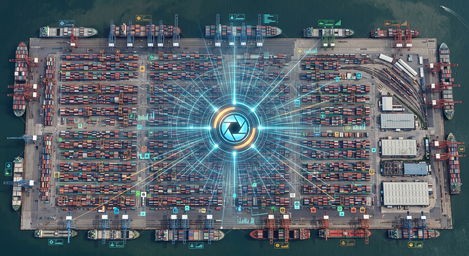
Visual processing has historically been bottlenecked by low resolution limits, causing models to hallucinate text on dense charts. Opus 4.7 shatters this barrier with native processing for massive 3.75 Megapixel images without downscaling or losing detail.
For quantitative finance and algorithmic trading, this is a game-changer. The model can now ingest highly dense Bloomberg terminal screenshots, intricate S&P 500 candlestick charts, or microscopic satellite imagery of global shipping ports, and extract flawless, actionable data matrices in milliseconds.
The 2026 Competitive Landscape
How does Claude Opus 4.7 stack up against the current heavyweights in the market?
| Model / Ecosystem | Core Strengths | Where it Falls Short |
|---|---|---|
| Claude Opus 4.7 (Anthropic) | Agentic workflow orchestration, zero-shot coding accuracy, deep reasoning (xhigh), enterprise data security. | Lacks native text-to-video generation; ecosystem integration requires more custom pipeline engineering. |
| GPT-5.5 (OpenAI) | Unmatched multi-modal consumer accessibility, advanced real-time emotive voice, creative text synthesis. | Higher hallucination rates on massive codebases; "black box" unpredictability in rigid enterprise workflows. |
| Gemini 3 Pro/Ultra (Google) | Flawless native integration into Google Workspace, massive context caching efficiency, real-time data retrieval. | Deep autonomous agentic loops (self-correction) are less refined compared to Anthropic's "xhigh" tier. |
The Verdict:
While OpenAI dominates consumer tech and Google dominates workplace productivity, Anthropic has definitively claimed the throne for Enterprise Software Engineering and secure Quantitative Analysis. If you are building a system that executes trades or manages sensitive backend logic, Opus 4.7 is currently the safest and most capable engine on the market.
Upgrade Your Architecture Today
Legacy API integrations are already obsolete. Don't let your firm fall behind the Agentic curve. At AIdea Solutions, we specialize in migrating enterprise tech stacks and trading algorithms to the absolute cutting edge of AI models, including Opus 4.7.
Ready to deploy Autonomous Agents?
Skip the forms. Chat directly with our lead AI architects and integration engineers on WhatsApp.
💬 Let's Build the Future
The era of the "AI Copilot" is officially over. We have entered the age of the autonomous enterprise agent.
Mid-April 2026 has brought a seismic shift to the artificial intelligence ecosystem. Anthropic’s highly anticipated release of Claude Opus 4.7 is not just an incremental update; it is a structural redesign of how machines process logic, manage complex codebase architectures, and visually interpret the physical world.
For CTOs, quantitative developers, and enterprise architects, the message is clear: if you are still using AI merely to generate isolated snippets of text or code, you are vastly underutilizing the technology. Opus 4.7 shifts the paradigm toward Agentic Routines—where AI operates as an autonomous project manager, orchestrating multi-step workflows with deep oversight.
1. The "xhigh" Reasoning Tier: Deep Cognitive Loops
Previously, developers struggled with AI "hallucinations" on complex, multi-step math or logic problems. Opus 4.7 tackles this with the introduction of the new API parameter: reasoning_tier="xhigh".
When this tier is engaged, Claude stops providing instant, reactive answers. Instead, it enters a deep, autonomous Self-Verification Loop. It breaks a prompt down into mathematical sub-components, drafts a theoretical answer, actively attempts to find flaws in its own logic, and iteratively corrects itself before outputting a single token to the user.
To prevent runaway API costs from these deep-thinking loops, Anthropic simultaneously introduced Task Budgets. Developers can now hard-cap the computational spend on any specific logic problem, ensuring that Agentic AI operates efficiently within strict enterprise guardrails.
2. Architectural Coding: Smashing the SWE-bench Pro
The SWE-bench Pro is the industry gold standard for evaluating an AI's ability to resolve real-world GitHub issues within complex, massive codebases. Opus 4.7 recorded a massive 10.9-point jump over its predecessor.
This means Opus 4.7 is no longer just writing isolated Python functions. It is capable of understanding the entire topology of a massive repository. With the new /ultrareview swarm methodology, Opus 4.7 can spawn multiple sub-agents: one to refactor the database schema, one to update the frontend components, and one dedicated purely to ensuring cybersecurity compliance—all running in parallel.
3. Parsing the Unparsable: 3.75MP Vision
Visual processing has historically been bottlenecked by low resolution limits, causing models to hallucinate text on dense charts. Opus 4.7 shatters this barrier with native processing for massive 3.75 Megapixel images without downscaling or losing detail.
For quantitative finance and algorithmic trading, this is a game-changer. The model can now ingest highly dense Bloomberg terminal screenshots, intricate S&P 500 candlestick charts, or microscopic satellite imagery of global shipping ports, and extract flawless, actionable data matrices in milliseconds.
The 2026 Competitive Landscape
How does Claude Opus 4.7 stack up against the current heavyweights in the market?
| Model / Ecosystem | Core Strengths | Where it Falls Short |
|---|---|---|
| Claude Opus 4.7 (Anthropic) | Agentic workflow orchestration, zero-shot coding accuracy, deep reasoning (xhigh), enterprise data security. | Lacks native text-to-video generation; ecosystem integration requires more custom pipeline engineering. |
| GPT-5.5 (OpenAI) | Unmatched multi-modal consumer accessibility, advanced real-time emotive voice, creative text synthesis. | Higher hallucination rates on massive codebases; "black box" unpredictability in rigid enterprise workflows. |
| Gemini 3 Pro/Ultra (Google) | Flawless native integration into Google Workspace, massive context caching efficiency, real-time data retrieval. | Deep autonomous agentic loops (self-correction) are less refined compared to Anthropic's "xhigh" tier. |
The Verdict:
While OpenAI dominates consumer tech and Google dominates workplace productivity, Anthropic has definitively claimed the throne for Enterprise Software Engineering and secure Quantitative Analysis. If you are building a system that executes trades or manages sensitive backend logic, Opus 4.7 is currently the safest and most capable engine on the market.
Upgrade Your Architecture Today
Legacy API integrations are already obsolete. Don't let your firm fall behind the Agentic curve. At AIdea Solutions, we specialize in migrating enterprise tech stacks and trading algorithms to the absolute cutting edge of AI models, including Opus 4.7.
Ready to deploy Autonomous Agents?
Skip the forms. Chat directly with our lead AI architects and integration engineers on WhatsApp.
💬 Let's Build the FutureStart writing here...