
During the volatile Federal Open Market Committee (FOMC) press conferences, the market does not just react to what Chairman Jerome Powell says; it reacts violently to how he says it. A fractional pause, a micro-frown, or an imperceptible shift in vocal pitch can telegraph a hawkish or dovish pivot hundreds of milliseconds before the linguistic context is fully formed.
To capture this Alpha, elite quantitative funds have abandoned pure-text LLMs. Instead, they are deploying sovereign, edge-computed Multi-Modal Vision and Acoustic Neural Networks. These architectures ingest live, uncompressed RTSP (Real-Time Streaming Protocol) video feeds directly from the Federal Reserve, bypass linguistic translation entirely, and execute trades directly into the MetaTrader 5 (MT5) API based purely on continuous physiological sentiment tracking.

Figure 1.0: Real-time Mel-frequency cepstral coefficient (MFCC) extraction mapping vocal stress to volatility algorithms.
Acoustic Prosody: Trading the Vocal Frequency
Human speech carries a dense layer of metadata independent of vocabulary, known as prosody. A Multi-Modal HFT (High-Frequency Trading) bot utilizes custom acoustic models—often derivatives of architectures like Wav2Vec 2.0 or HuBERT, heavily quantized for edge inference—to extract these features in real-time.
-
⎍
Pitch Jitter & Shimmer Analysis The AI isolates the fundamental frequency (F0) of the speaker's voice. Micro-fluctuations in pitch (jitter) and amplitude (shimmer) are highly correlated with cognitive load and stress. A sudden, uncharacteristic spike in jitter when answering a question about inflation target metrics acts as an immediate predictive indicator of defensive posturing (Hawkish).
-
⎍
Speech Rate & Temporal Pacing By measuring the exact duration of phonation versus silent pauses, the algorithm detects hesitation. When a central banker deviates from their baseline speech rate prior to delivering forward guidance, the MT5 execution engine immediately scales down position sizing to account for impending volatility spikes.

Spatial-Temporal Graph Convolutional Networks (ST-GCN)
To capture fleeting facial movements that last less than 1/15th of a second, the architecture relies on ST-GCNs. These networks map 46 distinct facial action units, tracking the geometric relationship between biometric nodes over time, completely bypassing the latency of frame-by-frame rendering.
Computer Vision: The Facial Action Coding System (FACS)
Audio is only half the equation. The second modality involves deploying highly optimized Vision Transformers (ViTs) running on localized Tensor Core GPUs. The objective is to decode the subject's face using the Facial Action Coding System (FACS).
The vision model isolates specific Action Units (AUs). For example, the activation of AU4 (Brow Lowerer) combined with AU15 (Lip Corner Depressor) forms a classic micro-expression of negative affect or concern. Because the video feed is processed at 60 frames per second, the AI detects the onset of this biometric shift within ~16 milliseconds.
When combined with an NLP stream processing the live audio transcript, the model achieves Semantic-Biometric Divergence detection. If the transcript dictates a dovish, reassuring statement ("We are confident in a soft landing"), but the FACS model detects high-stress AU combinations, the algorithm registers a divergence. Markets historically punish divergence with aggressive sell-offs. The bot front-runs this realization.
ARCHITECTURE Multi-Modal Fusion & MT5 Socket Bridge
To achieve sub-40ms end-to-end latency, standard HTTP REST APIs are discarded. The Python-based neural network architecture concatenates the Audio, Vision, and NLP tensors into a joint embedding space. The resulting "Hawk/Dove Signal" is fired directly into MetaTrader 5 using ZeroMQ (ZMQ) TCP sockets via a custom C++ bridge.
import zmq
import torch
import numpy as np

# Initialize high-speed ZeroMQ PUSH socket to MT5 C++ bridge
context = zmq.Context()
mt5_socket = context.socket(zmq.PUSH)
mt5_socket.connect("tcp://127.0.0.1:5555")

def evaluate_fomc_modality(audio_tensor, vision_tensor, text_tensor):
    # Pass through pre-trained Multimodal Fusion Network
    with torch.no_grad(): # Disable gradients for ultra-fast inference
        joint_embedding = fusion_model(audio_tensor, vision_tensor, text_tensor)
        hawkish_probability = softmax_classifier(joint_embedding)

    # Threshold check: If Hawkish confidence > 85%, execute aggressive short
    if hawkish_probability > 0.85:
        trade_payload = {
            "action": "TRADE_ACTION_DEAL",
            "symbol": "US500",
            "volume": 50.0,  # Lot size dynamically scaled by Kelly Criterion module
            "type": "ORDER_TYPE_SELL_MARKET",
            "magic": 999111, # Strategy identifier
            "latency_timestamp_ns": time.time_ns()
        }

        # Serialize and blast to MT5 terminal
        mt5_socket.send_json(trade_payload)
        return "SIGNAL_FIRED_SELL"
Live Simulation: The Information Arbitrage Window
To visualize the sheer power of this architecture, we must look at the latency timeline of a market-moving statement. The interactive chart below simulates the exact chronological delta between the physiological tell (when the AI executes) and the semantic conclusion (when retail algorithms and human traders finally react).
Latency Arbitrage: The "Hawkish Pivot"
Timeline of an FOMC statement vs. S&P 500 Price Action.
Hardware Requirements: Sovereign Edge Deployment
You cannot achieve this level of execution relying on OpenAI or Anthropic cloud endpoints. The round-trip ping alone (often 150ms - 500ms) nullifies the arbitrage edge. Furthermore, feeding live, uncompressed biometric data into a third-party commercial API introduces severe data compliance and throttling risks.
Institutional quantitative funds partner with firms like AIdea Solutions to build sovereign, air-gapped architectures. We deploy highly quantized (INT8/INT4) Vision and Audio models directly onto localized hardware—typically utilizing Nvidia RTX 6000 Ada Generation or H100 PCIe GPUs co-located in the same data centers as the trading exchange servers (e.g., NY4 in Secaucus, NJ).
By marrying proprietary Multi-Modal Machine Learning with ultra-low latency networking (ZeroMQ to MT5 via C++ wrappers), we provide funds with an asymmetric informational advantage that standard text-scraping bots simply cannot touch.
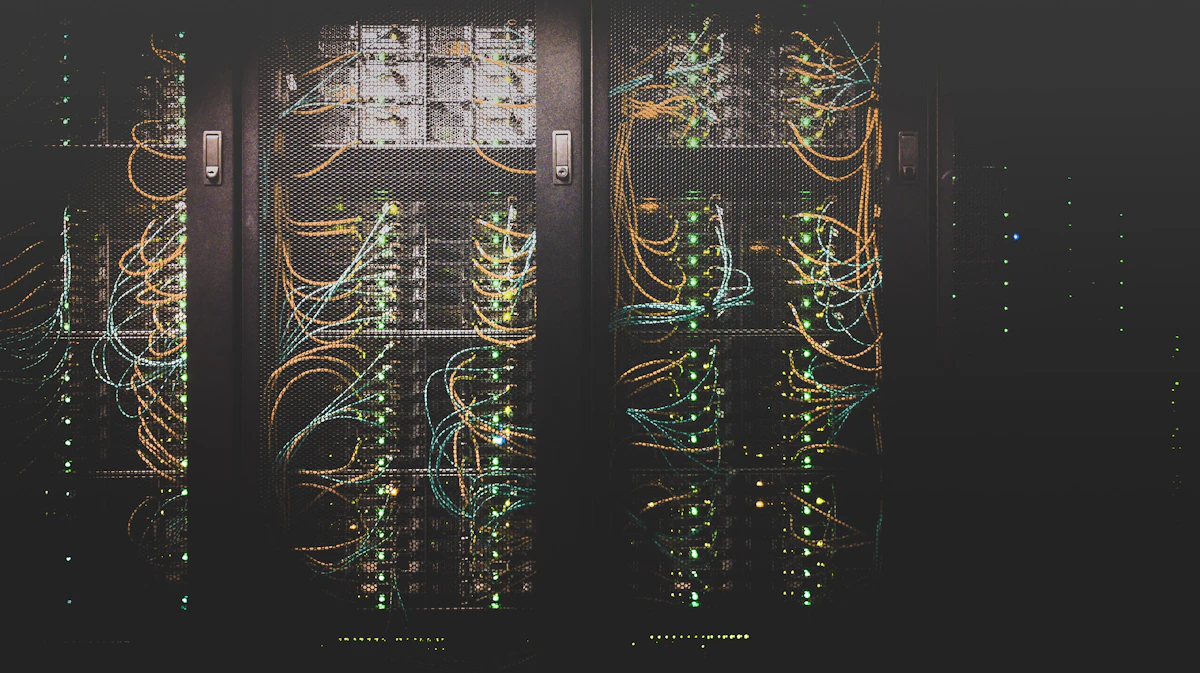
Co-Located Edge Intelligence: Eliminating Cloud Routing Drag.
Engineer Your Proprietary Edge
Stop relying on delayed NLP sentiment scrapers. At AIdea Solutions, we architect sovereign, multi-modal machine learning pipelines integrated directly into MT5 for sub-millisecond quantitative execution.
During the volatile Federal Open Market Committee (FOMC) press conferences, the market does not just react to what Chairman Jerome Powell says; it reacts violently to how he says it. A fractional pause, a micro-frown, or an imperceptible shift in vocal pitch can telegraph a hawkish or dovish pivot hundreds of milliseconds before the linguistic context is fully formed.
To capture this Alpha, elite quantitative funds have abandoned pure-text LLMs. Instead, they are deploying sovereign, edge-computed Multi-Modal Vision and Acoustic Neural Networks. These architectures ingest live, uncompressed RTSP (Real-Time Streaming Protocol) video feeds directly from the Federal Reserve, bypass linguistic translation entirely, and execute trades directly into the MetaTrader 5 (MT5) API based purely on continuous physiological sentiment tracking.
Figure 1.0: Real-time Mel-frequency cepstral coefficient (MFCC) extraction mapping vocal stress to volatility algorithms.
Acoustic Prosody: Trading the Vocal Frequency
Human speech carries a dense layer of metadata independent of vocabulary, known as prosody. A Multi-Modal HFT (High-Frequency Trading) bot utilizes custom acoustic models—often derivatives of architectures like Wav2Vec 2.0 or HuBERT, heavily quantized for edge inference—to extract these features in real-time.
-
⎍
Pitch Jitter & Shimmer Analysis The AI isolates the fundamental frequency (F0) of the speaker's voice. Micro-fluctuations in pitch (jitter) and amplitude (shimmer) are highly correlated with cognitive load and stress. A sudden, uncharacteristic spike in jitter when answering a question about inflation target metrics acts as an immediate predictive indicator of defensive posturing (Hawkish).
-
⎍
Speech Rate & Temporal Pacing By measuring the exact duration of phonation versus silent pauses, the algorithm detects hesitation. When a central banker deviates from their baseline speech rate prior to delivering forward guidance, the MT5 execution engine immediately scales down position sizing to account for impending volatility spikes.
Spatial-Temporal Graph Convolutional Networks (ST-GCN)
To capture fleeting facial movements that last less than 1/15th of a second, the architecture relies on ST-GCNs. These networks map 46 distinct facial action units, tracking the geometric relationship between biometric nodes over time, completely bypassing the latency of frame-by-frame rendering.
Computer Vision: The Facial Action Coding System (FACS)
Audio is only half the equation. The second modality involves deploying highly optimized Vision Transformers (ViTs) running on localized Tensor Core GPUs. The objective is to decode the subject's face using the Facial Action Coding System (FACS).
The vision model isolates specific Action Units (AUs). For example, the activation of AU4 (Brow Lowerer) combined with AU15 (Lip Corner Depressor) forms a classic micro-expression of negative affect or concern. Because the video feed is processed at 60 frames per second, the AI detects the onset of this biometric shift within ~16 milliseconds.
When combined with an NLP stream processing the live audio transcript, the model achieves Semantic-Biometric Divergence detection. If the transcript dictates a dovish, reassuring statement ("We are confident in a soft landing"), but the FACS model detects high-stress AU combinations, the algorithm registers a divergence. Markets historically punish divergence with aggressive sell-offs. The bot front-runs this realization.
ARCHITECTURE Multi-Modal Fusion & MT5 Socket Bridge
To achieve sub-40ms end-to-end latency, standard HTTP REST APIs are discarded. The Python-based neural network architecture concatenates the Audio, Vision, and NLP tensors into a joint embedding space. The resulting "Hawk/Dove Signal" is fired directly into MetaTrader 5 using ZeroMQ (ZMQ) TCP sockets via a custom C++ bridge.
import zmq
import torch
import numpy as np

# Initialize high-speed ZeroMQ PUSH socket to MT5 C++ bridge
context = zmq.Context()
mt5_socket = context.socket(zmq.PUSH)
mt5_socket.connect("tcp://127.0.0.1:5555")

def evaluate_fomc_modality(audio_tensor, vision_tensor, text_tensor):
    # Pass through pre-trained Multimodal Fusion Network
    with torch.no_grad(): # Disable gradients for ultra-fast inference
        joint_embedding = fusion_model(audio_tensor, vision_tensor, text_tensor)
        hawkish_probability = softmax_classifier(joint_embedding)

    # Threshold check: If Hawkish confidence > 85%, execute aggressive short
    if hawkish_probability > 0.85:
        trade_payload = {
            "action": "TRADE_ACTION_DEAL",
            "symbol": "US500",
            "volume": 50.0,  # Lot size dynamically scaled by Kelly Criterion module
            "type": "ORDER_TYPE_SELL_MARKET",
            "magic": 999111, # Strategy identifier
            "latency_timestamp_ns": time.time_ns()
        }

        # Serialize and blast to MT5 terminal
        mt5_socket.send_json(trade_payload)
        return "SIGNAL_FIRED_SELL"
Live Simulation: The Information Arbitrage Window
To visualize the sheer power of this architecture, we must look at the latency timeline of a market-moving statement. The interactive chart below simulates the exact chronological delta between the physiological tell (when the AI executes) and the semantic conclusion (when retail algorithms and human traders finally react).
Latency Arbitrage: The "Hawkish Pivot"
Timeline of an FOMC statement vs. S&P 500 Price Action.
Hardware Requirements: Sovereign Edge Deployment
You cannot achieve this level of execution relying on OpenAI or Anthropic cloud endpoints. The round-trip ping alone (often 150ms - 500ms) nullifies the arbitrage edge. Furthermore, feeding live, uncompressed biometric data into a third-party commercial API introduces severe data compliance and throttling risks.
Institutional quantitative funds partner with firms like AIdea Solutions to build sovereign, air-gapped architectures. We deploy highly quantized (INT8/INT4) Vision and Audio models directly onto localized hardware—typically utilizing Nvidia RTX 6000 Ada Generation or H100 PCIe GPUs co-located in the same data centers as the trading exchange servers (e.g., NY4 in Secaucus, NJ).
By marrying proprietary Multi-Modal Machine Learning with ultra-low latency networking (ZeroMQ to MT5 via C++ wrappers), we provide funds with an asymmetric informational advantage that standard text-scraping bots simply cannot touch.
Co-Located Edge Intelligence: Eliminating Cloud Routing Drag.
Engineer Your Proprietary Edge
Stop relying on delayed NLP sentiment scrapers. At AIdea Solutions, we architect sovereign, multi-modal machine learning pipelines integrated directly into MT5 for sub-millisecond quantitative execution.
Start writing here...